
Love, Bound & Broken
What Love Meant Before Romance

Valentine’s Day didn’t start as a celebration of romance. It began as a reminder that love, when taken seriously, puts you at odds with the world.
Long before cards and flowers, love meant vow, witness, sacrifice, and consequence. It bound people together, exposed them to loss, and demanded more than comfort ever could.
The history of love is severe, demanding, and often unbearable.
Love binds. Love wounds. Love endures without reward. Love annihilates the self. Love survives history.
These are the conditions under which love has actually been lived, sung, prayed, hidden, and survived.
When love matters, it costs something—sometimes everything.
These two playlists follow that older understanding. They trace love as obligation, fixation, silence, flesh, ruin, and residue.
Love at Cost moves through the symphonic and sacred tradition, where love is bound to vow, ritual, and transcendence.
Love Is Not Kind moves through modern studio recordings, where love is embodied, confessed, concealed, broken, and remembered.
Together they map a single moral arc: Vow, Desire, Obsession, Silence, Flesh, Ruin, What Remains.
This Valentine’s Day issue of Drop the Needle: Music That Matters is an invitation to hear familiar music differently and discover unfamiliar music that tells the truth plainly.
If you want more listening that treats music seriously and refuses easy answers, subscribe to Drop the Needle: Music That Matters at droptheneedle.substack.com.
If you want to help Drop the Needle: Music That Matters, here are a few simple ways to support this work:
Leave a comment to share your thoughts on this music.
Share this issue with someone who enjoys discovering new music like this.
Click on a link to listen to the music. Let it become your sonic wallpaper while you work.
Click “like” at the bottom of this post to signal to the algorithm that this content deserves a place at the top.
When an issue hits your inbox, open it that day.
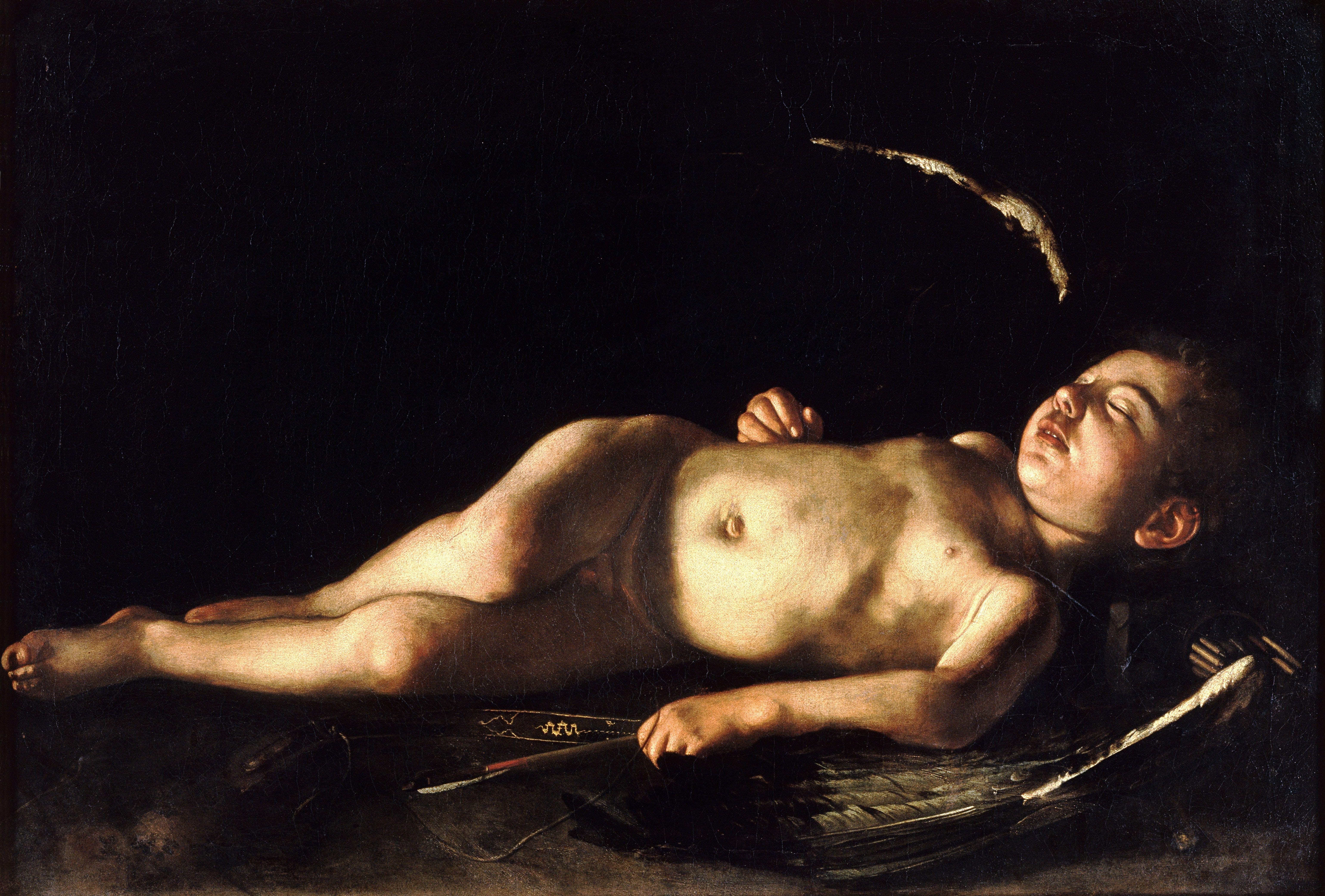
Cupid lies disarmed and exhausted, love stripped of triumph and sentiment, reduced to vulnerable flesh.
Playlist: Love at Cost
about 4 hours, 19 minutes
This music belongs here because it treats love as a binding force.
Across centuries, cultures, and styles, these works return to the same truth: when you take love seriously, it reshapes identity, demands obedience, exposes the self, and survives long after comfort disappears.
Listening to this music means encountering how human beings have understood love when the stakes were real.
The opening set is grounded in vow, witness, and covenant.
In Pérotin’s Viderunt Omnes, love is public and cosmic, sung as something that binds a community in shared recognition.
Gregorio Allegri’s Miserere mei, Deus moves inward, presenting love as penitence and endurance. The plea for mercy assumes relationship, accountability, and consequence.
Giovanni Battista Pergolesi’s Stabat Mater places love at the foot of catastrophe. Mary does not intervene. She remains. This is love expressed as presence when nothing can be fixed.
Ludwig van Beethoven’s Symphony No. 7, II Allegretto completes the set by translating covenant into motion. Love persists through repetition and resolve, carried forward without display.
The second set turns to obligation, ritual, and obedience.
Igor Stravinsky’s Les Noces treats marriage as an irreversible threshold. Love here is social, ritualized, and binding, enacted by the group as much as by the individuals within it.
Johannes Brahms’s Symphony No. 4 finale adopts the rare passacaglia form, where love emerges through discipline and structure. The emotional weight builds through restraint.
Benjamin Britten’s Passacaglia from Peter Grimes places love under moral pressure. It circles the same ground repeatedly, revealing how devotion and isolation can coexist and how care can harden into compulsion.
The third set confronts forbidden love, exposure, and collapse.
Pyotr Ilyich Tchaikovsky’s Symphony No. 6, I Adagio carries the weight of a life lived under concealment. His queer love is present, powerful, and unspoken, shaped by fear and impossibility.
Gustav Mahler’s Symphony No. 10, I Adagio and the final movement of his Symphony No. 5 move between rupture and fragile affirmation. Love here is conflicted, ironized, and wounded, yet still central to meaning.
These works expose what happens when love is real but unsheltered.
The fourth set enters eros, annihilation, and transcendence.
Richard Wagner’s Tristan und Isolde refuses to reconcile love with ordinary life. Desire overwhelms structure, dissolves identity, and seeks completion beyond the world’s limits. The Prelude and the final transfiguration present love as totalizing—fulfillment demands the surrender of the self.
The fifth set addresses love after history breaks.
The Lacrimosa from György Ligeti’s Requiem emerges from the shadow of mass trauma, where love survives as memory and terror.
Arnold Schoenberg’s A Survivor from Warsaw presents love as collective identity and remembrance spoken under the threat of annihilation.
Henryk Górecki’s Symphony No. 3, III Lento offers endurance without resolution. Love persists quietly, stripped of spectacle, sustained through suffering.
The final set turns toward renunciation, memory, and what remains.
Arvo Pärt’s Cantus in Memory of Benjamin Britten and Tabula Rasa embody love as subtraction. Meaning emerges through simplicity, silence, and restraint.
The Pie Jesu from Maurice Duruflé’s Requiem frames love as rest—a longing for peace that follows devotion.
Louange à l’Éternité de Jésus from Olivier Messiaen’s Quartet for the End of Time closes the arc by lifting love beyond chronology. Written in captivity, it affirms eternity as the final horizon of devotion.
This music matters because it preserves an older moral understanding of love that modern culture has thinned out. It shows love as vow, as burden, as witness, as survival.
Listening demands patience, attention, and openness to discomfort. The reward is recognition.
In hearing how others have carried love through obligation, loss, and history, listeners gain language for experiences that rarely fit into romance or optimism.
This is why the music belongs together, and why it deserves to be heard now.
Click below to listen to the full playlist for free on your preferred platform.
Listen to Love at Cost for free on YouTube by clicking here or by clicking on this link:
https://youtube.com/playlist?list=PL9DUErBn8LGsp27rMHATmrecaQhF1hRc_&si=ooZIfEqRvw-Npre6
Listen to Love at Cost for free on Spotify by clicking here or by clicking the play button below:
Playlist: Love Is Not Kind
about 2 hours, 44 minutes
This music belongs together because it treats love as something that binds the self to consequence. These songs name devotion, desire, obsession, silence, flesh, damage, and endurance without softening what those experiences demand.
Listening to this playlist means following love as it’s lived rather than imagined. The reward is recognition rather than reassurance.
The opening set centers on devotion, promise, and binding.
Leonard Cohen’s Suzanne frames love as reverence that blurs the line between the sacred and the personal. The song listens more than it declares, placing commitment in attention and restraint.
Nick Cave’s Into My Arms presents belief as a wager made for the sake of another person. Love becomes a choice made in full knowledge of doubt.
Tim Buckley’s Song to the Siren gives devotion a fatal clarity. The voice reaches toward something known to be unreachable and does so anyway.
Anaïs Mitchell’s Wedding Song grounds marriage in labor, memory, and mutual obligation—a vow spoken without illusion.
Townes Van Zandt’s If I Needed You closes the set by offering love as quiet dependency that refuses spectacle.
The second set names desire without sanitizing it.
Leonard Cohen’s Famous Blue Raincoat treats longing as unfinished correspondence—a triangle of devotion, betrayal, and grace that never resolves.
Beirut’s Nantes ties desire to distance and fatalism, where love becomes inseparable from leaving.
Elvis Costello’s I Want You exposes desire as fixation that overwhelms dignity, refusing metaphor.
New Order’s Your Silent Face places longing inside restraint, where silence carries more weight than confession.
The third set explores obsession, loop, and no exit.
Chris Isaak’s Wicked Game circles a desire that can neither be escaped nor fulfilled.
Depeche Mode’s Enjoy the Silence shows how withholding speech becomes both control and intimacy.
Portishead’s The Rip suspends love in anticipation, where surrender feels both necessary and dangerous.
James Blake’s Retrograde traps emotion in repetition, mirroring how love can replay its own damage.
Björk’s Unravel treats attachment as something that comes undone slowly and painfully.
Cigarettes After Sex’s K. places desire in a dreamlike stasis where escape feels impossible.
The fourth set addresses love that cannot speak its name.
Bronski Beat’s Smalltown Boy frames love as exile imposed by fear and social judgment.
Kate Bush’s This Woman’s Work presents love through care and vulnerability.
Sufjan Stevens’s The Predatory Wasp of the Palisades Is Out to Get Us! gives forbidden love a fragile lyricism shaped by memory and risk.
SPELLLING’s Boys at School examines identity, longing, and visibility in a world that punishes deviation.
The fifth set insists on the body.
Nine Inch Nails’s Closer confronts desire as compulsion that refuses moral distance.
Portishead’s Glory Box ties sensuality to power and negotiation.
Kylie Minogue’s Slow treats desire as control through restraint.
FKA twigs’s Cellophane exposes the body’s fragility and endurance.
Massive Attack’s Teardrop places intimacy in breath and pulse.
Kate Bush’s Running Up That Hill imagines empathy as bodily exchange.
Fiona Apple’s Criminal admits desire without apology and accepts its consequences.
The sixth set turns to love after damage.
Radiohead’s True Love Waits treats commitment as persistence through depletion.
Blur’s No Distance Left to Runaccepts separation as the final form of honesty.
Amy Winehouse’s Love Is a Losing Game names loss without self-deception.
Sufjan Stevens’s Fourth of July places love in the space between care and mortality.
The final set asks what remains.
Damien Rice’s The Blower’s Daughter leaves love unresolved and exposed.
Radiohead’s Motion Picture Soundtrackimagines love carried beyond collapse.
The Beach Boys’s God Only Knows treats devotion as mystery rather than certainty.
Jeff Buckley’s Hallelujah holds faith and desire in tension.
Joy Division’s Love Will Tear Us Apart accepts that love can undo what it creates.
Cat Power’s Sea of Love reduces attachment to quiet endurance.
Common’s Faithfulcloses the arc by returning love to trust sustained over time.
This music matters because it restores gravity to a word flattened by repetition.
It invites listeners to hear love as vow, risk, exposure, and survival. In doing so, it expands the ideas introduced in the opening by showing how love binds lives together long after romance fades.
Listening is an act of attention and honesty, and that remains one of the most faithful responses love asks of us.
Click below to listen to the full playlist on your preferred platform.
Listen to Love Is Not Kind for free on YouTube by clicking here or by clicking on this link:
https://youtube.com/playlist?list=PL9DUErBn8LGuPQESjc0y9MoGPryLOfNZp&si=udWGPDuNbTJepqAt
Listen to Love Is Not Kind for free on Spotify by clicking here or by clicking the play button below:
Coda
After the playlists end, nothing is resolved. Love does not close neatly, and it does not return what it takes. What remains is a condition.
You’ve heard how love binds people to vows they cannot escape, to bodies they cannot leave, to losses they cannot undo. You’ve heard how it survives history, scandal, silence, and time itself. That knowledge demands recognition.
Romance is recent. Love is older than language. Long before it was expected to fulfill or affirm, love asked people to bear something together. These songs endure because they were shaped under that pressure. They weren’t written to soothe. They were written to hold.
At this point, you—the listener (if you’re a listener)—become accountable.
Having heard how others have carried love through obligation, secrecy, damage, and memory, the question shifts. What does love ask of you? Listening carefully is already a response. Attention is a form of consent.
Nothing here promises happiness. What it offers is clarity.
Love binds. Love wounds. Love endures. Love survives.
To listen all the way through is to accept that love doesn’t exist to resolve us, but to place us inside something larger, heavier, and more lasting than comfort.
If this way of listening resonates, there’s a parallel project worth your time. Make a Roux Already approaches food the same way Drop the Needle approaches music—with attention, history, and respect for craft. It explores technique, tradition, and why certain things matter long before they become trends.
Subscribe to Make a Roux Already and follow the work at makearouxalready.substack.com.
